A 30-year-old German man was arrested on 11th of January 2018 for ordering 300 grams of amphetamine and a small quantity of methamphetamine from the darkweb

A 30-year-old from Deggendorfer, Germany has ordered 300 grams of amphetamine (photo) and a small-sized methamphetamine crystal. The law enforcement was tracking the man from August of 2018.

On Friday 11th of January 2019, the policemen raided the residence of the suspect and found about 300 grams of amphetamine and a small amount of crystal meth, under ten grams. Furthermore, the Bundeskriminalamt (BKA) officials also found various chemical ingredients that suggest the production of narcotic drugs, laboratory utensils, and drug paraphernalia.

The culprit is now being investigated for several criminal violations under the Narcotics Act and has been released under judicial review.

SOURCE: https://www.idowa.de/inhalt.deggendorf-im-darknet-drogen-bestellt.bdbfbedd-865a-4c40-852b-002c87923ced.html

A 31-year-old Austrian has been convicted to 18 months of conditional imprisonment for ordering counterfeit darkweb money — he had priors but just “couldn’t resist” the temptation

The Austrian man ordered ten fake €50 banknotes off the Dream Market Toplist and received three €50 notes as a bonus from the deep web merchant.

According to prosecutors, the man gave €100 to a friend and €50 to a Billa supermarket in Weigelsdorf, municipality of Ebreichsdorf. He gave the fake €100 to his friend because he owed him money and was drunk at the time, but as the culprit declares himself, they are no longer friends. The other €50 were spent in a Billa supermarket where the cashier became suspicious of the texture of the money but accepted them regardless.

“The offer appeared on the ‘Dream Market Toplist’, where you can see the latest products. I’ve seen, clicked and ordered,” the suspect declared in court.

The man had priors regarding counterfeit money and amphetamine abuse and was on probation. When the judge asked why he had made such a mistake after one year of good behavior, the accused replied:

“I soon realized that this is nonsense. I could not resist. But then I destroyed the rest of the counterfeit myself because I realized what kind of nonsense it is.”

The man admitted that he entered the darknet in search of amphetamines, but a fake money marketplace caught his eye and couldn’t resist the temptation.

The culprit received an 18-month suspended sentence thanks to his sincerity and favorable circumstances. Furthermore, he tested negative for drug use and is currently under therapy at the Green Circle.

SOURCE: https://www.noen.at/baden/weigelsdorf-vor-gericht-gelandet-falschgeld-im-darknet-bestellt-weigelsdorf-darknet-falschgeld-prozess-gericht-132077887

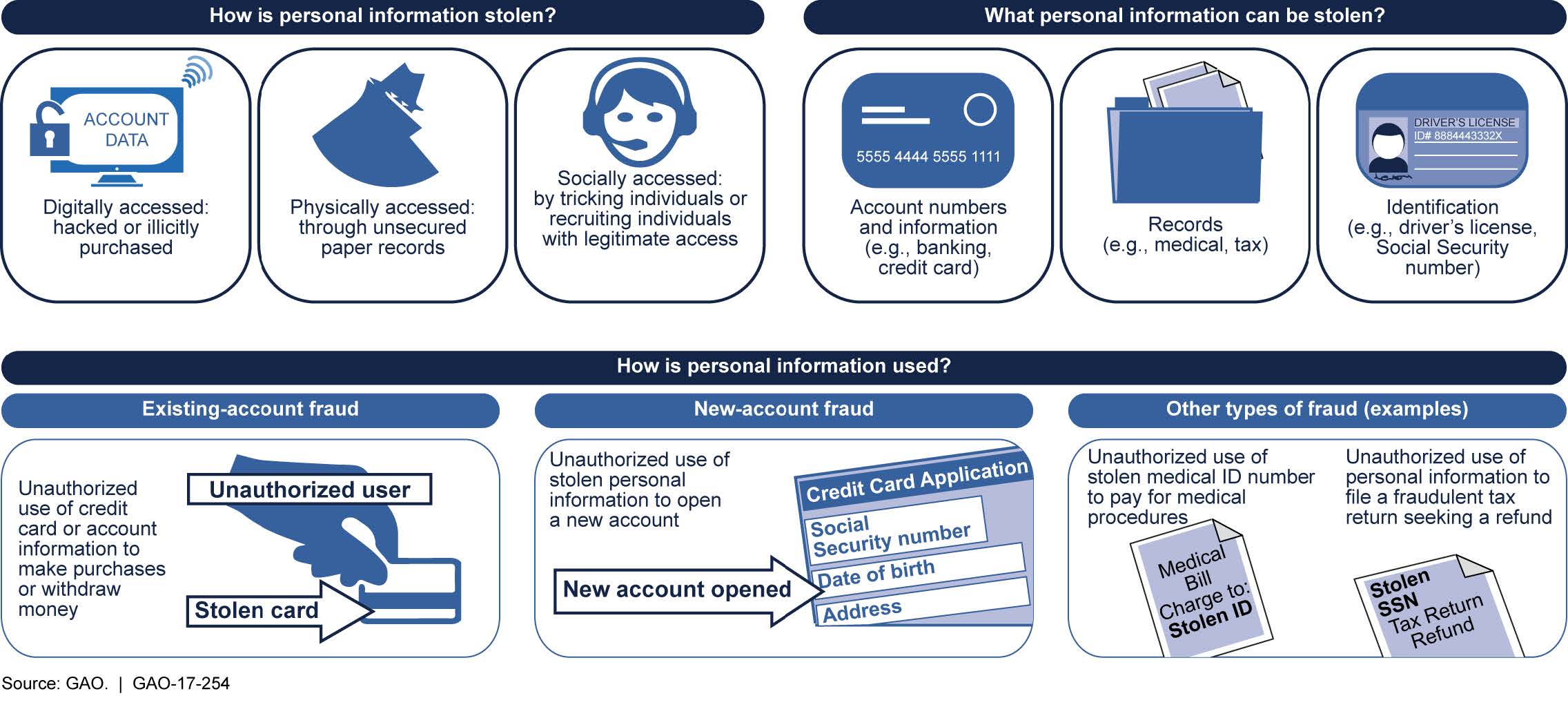
A credit card scam gang from New York was arrested on 8th of January 2018 for fraudulent transactions of $3 million

Hamilton Eromosele, 29-years-old, was the alleged leader of the gang, alongside Youssouf “Slim” Traore and Deja “Mo Bandz” Monet Handsford. The U.S. District Court in Newark accused all three of conspiracy to commit bank fraud. However, Hamilton Eromosele is also indicted for aggravated identity theft.

“To date, the total amount of stolen credit card purchases confirmed as part of the conspiracy is approximately $3 million.” The criminal complaint states.

Hamilton Eromosele, also known as Emmanuel Eromosele or Donald Sele, is the ringleader of the criminal network. He would obtain credit card information from various sources, including the darkweb, and would recruit women through social media platforms. The women would then travel throughout the country to retrieve the illegally purchased goods for a percentage of the earnings.

According to the court affidavit, the U.S. Secret Service raided an apartment in New Rochelle where all three suspects were arrested, besides multiple credit cards scattered all over the apartment. More so, several cards were also thrown out of a window. A fact that might impact their sentence negatively, as the group tried to dispose of evidence.                                                          All three of the suspects had previous encounters with criminality:
1. The ringleader Hamilton Eromosele was arrested in 2016, in East Rutherford, New Jersey for the sequestration of a woman in a hotel room involving a credit card scheme feud. Furthermore, the officers found 19 fake Discover credit cards in an adjacent hotel room and 700 credit card credentials on his laptop.

2. Youssouf “Slim” Traore was apprehended in 2017, in Fayetteville, Arkansas for trying to purchase a $4,800 Rolex watch with a Discover card listed to his name but with a stolen account number.

3. Deja “Mo Bandz” Monet Handsford was caught in 2017, in Lyons, Georgia after an Uber driver called the police over suspicions of fraud. More precisely, the chauffeur drove the woman to several stores and paid with numerous credit cards. Shortly after, the police arrived and found four Discover cards hidden in the car, none of which were listed on her name.

Taking into consideration the existence of a criminal past for all suspects, and aggravating factors such as evidence disposal, the criminal group is expected to receive up to 15 years in prison and a fine of $25,000.

A-credit-card-scam-gang-from-New-York-was-arrested-on-8th-of-January-2018-for-fraudulent-transactions-of-$3 million

SOURCE: https://westfaironline.com/110316/three-arrested-in-new-rochelle-accused-in-3m-stolen-credit-card-ring/

https://www.hg.org/credit-card-fraud.html

Hungarian man sentenced to eight months of incarceration in Austria for ordering €12,000 of darknet speed and ecstasy — busted by his postman

Akas K. is a Hungarian man residing in Austria who ordered €12,000 worth of amphetamine and ecstasy from the darknet under the alias “Johann Wagner.” He ordered multiple parcels to a gas station in St. Margarethen in Burgenland and would resell the drugs back in his Hungarian homeland. He was convicted to eight months in jail and 16 months suspended sentence by the court of Eisenstadt. (photo)

The investigation began when the postman alerted the police. The carrier became suspicious after interacting with the man for a few times. While he was delivering other parcels in the same area, Akas would always hassle the postman by insistently asking about his incoming package. Furthermore, the man spoke a broken German which also raised questions about his identity:

“Do you have a parcel for me, my name is Wagner.”

After the police got involved, a trap was set and shortly after they caught the dealer in flagrant. In the court of Eisenstadt, the drug dealer confessed:

“I’m not addicted myself, I did it solely because I knew I could make a lot of money out of it quickly,” the accused admitted frankly.

After a brief deliberation, the court sentenced him to a partial prison sentence of 24 months, of which eight months have to be served.

Taking into consideration the severe penal accusations, in this case, the offender received a light sentence. International distribution of high-risk narcotics is a serious offense and the fact that his court testimony was so sincere might have been the key to his reduced and suspended sentence.

The German penal code dictates:

“The illicit supply, cultivation, and manufacture of narcotic drugs carry penalties of up to five years’ imprisonment. The penalty range increases to 1-, 2- or 5-15 years in defined aggravating circumstances, which include factors such as larger quantities of narcotic drugs, supplying or involving minors, gang membership and carrying weapons.”

SOURCE: https://www.krone.at/1842936

http://www.emcdda.europa.eu/countries/drug-reports/2018/germany/drug-laws-and-drug-law-offences_en

A 62-year-old man from Spain was arrested as part of Operation Napalm for possession of extremely disturbing child pornography from DarkWeb forums

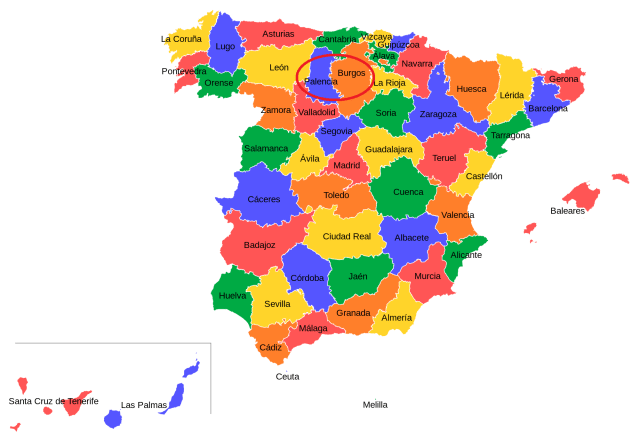
The Civil Guard of Burgos has arrested, in the framework of Operation Napalm, a 62-year-old man, who lived in the province of Palencia, Spain under the accusations of instigating to prostitution and sexual exploitation, corruption of minors, and possession of pedopornography.

A-62-year-old-man-from-Spain-was-arrested-as-part-of-Operation-Napalm-for-possession-of-extremely-disturbing-child-pornography-from-DarkWeb-forums.png

The investigation started in November 2018 when the Commandery of Burgos was informed, as a result of the measures for prevention and risk detection by the Corps personnel, of the possible existence of certain computer files related to the sexual exploitation of children. The Technological Investigation Team of the Judicial Police Organic Unit of Burgos took charge of the investigations, aiming to recover all possible files in immediate circulation, identify its recent owners, arrest the suspects, and organize proof for the criminal case. The PC registry of the suspect verified the existence of images of explicitly pornographic content and “extremely hard” images of young children.

In the house, four storage devices (HDDs) have been confiscated and are being currently under inquiry. Most of the media come from downloads through the deepweb, through “Peer to Peer” programs, or through private forums on the darknet.

“Nothing indicates so far that the victims are within our borders,” the police Command explains.

The Operation has been directed by the Court of Instruction of Carrión de los Condes, Palencia and seeks to root out other implicated members in the file transfers. Spain is both a transit and destination country for children trafficked for sexual purposes and it’s considered the largest host of child pornography in Europe. Since adopting the new European Union laws against child exploitation, the 62-year-old culprit is to be expecting no more than a few years of prison. Unlike other European countries who haven’t adopted the new European Union penal code against pedophiles, Spain has somewhat lowered the de jure punishment for pedopornography crimes. Italy, for example, would theoretically give a much harsher penalty for a similar case, providing a penalty from 8 to 12 years in prison, while the European Union law provides 1 to 3 years or 5 to 10 years for severe cases.

SOURCE: https://www.europapress.es/castilla-y-leon/noticia-detenido-palencia-hombre-62-anos-material-pedofilo-extremadamente-duro-20190112130858.html

https://www.publico.es/sociedad/detenido-hombre-62-anos-material-pedofilo-extremadamente-duro.html

RESOURCE:

http://www.ecpat.org/wp-content/uploads/legacy/Factsheet_Spain.pdf

https://eur-lex.europa.eu/legal-content/EN/TXT/?uri=celex%3A32011L0093

Click to access Legislation_on_Child_Pornography_Public1.pdf

A German 36-year-old received a suspended sentence of two years for personal consumption of 125 grams of darkweb amphetamines

The Schöffengericht Konstanz court in Radolfzell, Germany recently convicted a 36-year-old man to a suspended sentence of two years, 120 hours of community service, and a bundle of probationary requirements for ordering 125 grams of darkweb amphetamines two years ago, in 2017.

The law enforcement traced the man after the infamous deep web platform AlphaBay was busted in the summer of 2017. Subsequent raids on two platform employees in Dortmund revealed an address label for the 36-year-old culprit from Radolfzell. The handwritten label also indicated the contents for the shipment: 125 grams of amphetamine plus seven grams of cocaine. Fortunately enough for the accused, the cocaine charge was dropped since it was a “present” from the sellers and not a specifically ordered item.

None the less, the raid on the 36-year-old man revealed other drugs. Police entered the culprit’s residence at the start of 2018, finding small amounts of marijuana and hashish, as well as several synthetic drugs and 20 tablets of a strong prescription analgesic. He claimed that he had received the strong, morphine-containing painkillers from a friend with cancer, but it didn’t convince the judge. The defendant had no choice but to confess to illegal drug consumption and possession.

The evidence presented in the District Court of Radolfzell was rather thin. Mostly because of the nature of the court which seeks to expedite criminal cases and private lawsuits through accelerated procedures, the so-called “fast judges.” More so, no witnesses have been presented in the courthouse against the accused. Because, according to the presiding judge, the discovery of the darkweb platforms had drawn an extremely high investigation effort for the processing police officers in Dortmund. Therefore, they would not have time to travel through the country constantly, to testify before numerous local courts. Also important, no specific financial transactions were presented since the accused paid in cryptocurrencies which are almost untraceable.

Luckily for the accused, the judge dismissed the cocaine citation because the shippers packed the seven grams of cocaine without request, for customer loyalty as a “treat,” a common practice in illegal drug trafficking. The man reiterated the fact that he did indeed consume stimulating narcotics to “compensate” his introverted type, but never did cocaine out of principle. Upon hearing such an apparent logical contradiction, the judge replied:

“It could have also been rat poison, what you whistled in there!”

The final verdict of a one-year prison sentence was suspended over two years on “favorable social prognosis,” taking into consideration the fact that the accused “harmed mostly himself.” On top of the two-year prison sentence, he’s required to take periodic urine tests, drug rehabilitation, and 120 hours of community service.

SOURCE: https://www.suedkurier.de/region/kreis-konstanz/radolfzell/Drogenbestellung-im-Darknet-36-Jaehriger-erhaelt-Haftstrafe-auf-Bewaehrung;art372455,10015735

http://www.amtsgericht-konstanz.de/pb/,Lde/1165483

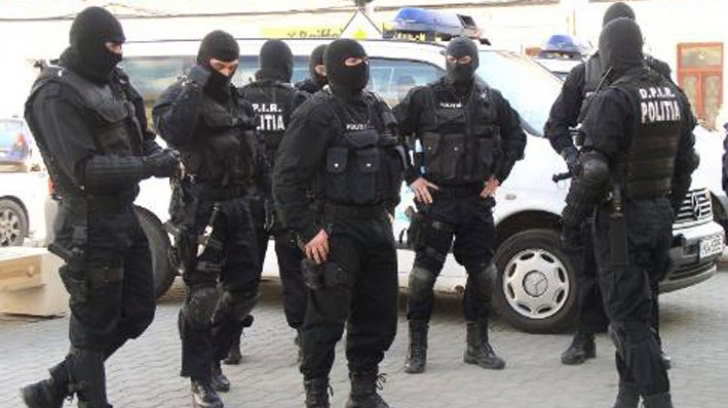
Three Romanian Darknet-supplied dealers get their preventive arrest changed to home arrest by the Criminal Court of Iaşi — the indicted traffickers may be gaining ground in the legal battle against DIICOT prosecutors

Gheorghe Dragoş Stoica, 24 years old, Adrian Iareş, 20 years old, and Mihai Mineaţă, 19 years old, are all from the Romanian city of Iaşi and will later be known as the “cartel” gang from the neighborhood of Mircea cel Bătrân.

The group has been accused of running a large-scale drug trafficking operation throughout the city’s streets and clubs.

According to the indictment, the three had sold prohibited substances to various electronic-music clubs in Iasi. The three young men have ordered multiple drug parcels through the darkweb, using other people in their entourage to receive the packages.

iasi-romania-darknet

In May 2018, the three ordered nearly 1,500 tablets of ecstasy and 13 grams of cocaine, dividing their drugs according to each one’s contribution in a local forest named Galata. After some of their parcels were stopped at the Frankfurt Airport in Germany, the young people turned to the Netherlands, a country where legislation is more permissive. Later, in June 2018, the dealers made a new order, receiving more than 150 tablets of MDMA and nearly 40 grams of cocaine from the Netherlands. Then the lawmen intercepted the parcel and replaced the drugs with beans and flour. Multiple raids ensued shortly after.

Direcția de Investigare a Infracțiunilor de Criminalitate (DIICOT) police force was hunting the group shortly after the Afterhills festival. The police mention other techno and electronic music clubs: Answer Club (currently closed), Sunrise, Skin (from Ciric), Zone and Under. Traffickers also went to other cities to search for their clients.

“From the cases of recent years, it was found that many young people who participated in such events, where techno-specific music diffused, bought and consumed high-risk drugs on those occasions, knowing that the effects these substances exacerbate their state of ecstasy, energy, hearing sensations, in fact, consuming such substances may lead to severe, sometimes irreversible complications such as heart failure, heart attack, heart attack, kidney failure, dehydration, liver dysfunctions , an abnormal level of toxins in the body, severe hallucinations, impulsivity, anxiety, psychosis, paranoia, and many such effects “, is what DIICOT representatives had to declare.

More so, the group had dubious business initiatives since 2011 when they opened a coffee shop which sold “ethnobotanics” or synthetic marijuana and designer narcotics. The legal gray area allowed the shop to prosper economically for approximately two years and helped the gang to keep their profits, most of which, were not taxed.

Mihai Mineaţă was the only one to give detailed statements to the prosecutors, explaining that they were consuming, not just selling, forbidden substances. Besides ecstasy and cannabis, he said he was selling amphetamines:

“I assume, acknowledge and regret the offenses committed, I did not think it would come to such a thing, and I think one of the reasons was that because of the consumption of such substances I did not think rationally. My parents have a good situation financially, they support me both financially and morally, even my father advised me, on the occasion of the search, to give any drugs to the police, I think we have committed these acts out of stupidity and peer pressure,” declared Mihai.

Although the court’s decision to change the group’s preventive arrest to house arrest is a favorable thing for the accused, it doesn’t necessarily mean it will coincide with the final decision. The anti-drug law in Romania is severe and provides harsh penalties for drug traffickers. Although the nature of the case creates some difficulties for the current criminal system, it’s difficult to speculate a light sentence. Similar cases of international hard-drug trafficking get sentences from ten years upwards.

SOURCE: https://www.ziaruldeiasi.ro/stiri/liceenii-traficanti-de-droguri-prin-cluburi-eliberati-din-arest–208897.html

https://www.ziaruldeiasi.ro/stiri/narcos-de-bahlui-politia-le-a-pregatit-o-surpriza-de-proportii-la-ultima-comanda–203476.html

https://www.jurisprudenta.com/dosare-procese/2018/6434q99q2018qa1.2-99/

A man from Nebraska is awaiting sentencing for sending child pornography to an undercover cop

Pete C. Blumenthal, 36 years old from Kearney, Nebraska was arrested on 9th of November 2018 for sharing pedopornography over the internet to an undercover officer. The felony charges were supposed to take effect on November the 8th 2018, but the case was sealed until 2nd of January 2018 to protect the on-going investigation.

A preliminary audition is scheduled at the end of January 2019 in Washington, D.C. where he’s currently being held in federal custody without bond. Blumenthal is represented by the public defender appointed to him by the court.

13062101_1249954055024025_6084883459083818856_n[1]

The court affidavit describes the investigation which started on 6th of November 2018. The Child Exploitation Task Force was masquerading and interacting as another participant in online pedophilia groups. Shortly after, a certain “badchicken33” responded to a message sent by the undercover cops. His IP address led back to Pete Blumenthal residence.

The private chat between Pete and the police began, and the culprit initially started sending non-pornographic images of boys and girls. After a while, Pete wanted to make sure he wasn’t stepping into a trap, so he simply asked:

“You’re (sic) not a cop right? Or any kind of agent??” Blumenthal wrote.
To which the officer replied, “Hell no. Perv here.”

Reassured, Pete continued sending more and more graphic images of penetrative and non-penetrative sex between adults and kids. Surely enough, a raid mandate was issued and executed on 36-year-old Pete C. Blumenthal.

The details of the operation aren’t fully known, but the small 3-day time frame of the investigation might indicate that the suspect had no cybersecurity protocols put in place whatsoever. His rather comical question to the undercover police officers seems to confirm the complete absence of experience in internet security. Under federal law, Pete is risking a minimum of 5 years to a maximum of 20 years of incarceration, depending on priors and forensics.

SOURCE: https://www.kearneyhub.com/news/local/kearney-man-federally-charged-with-distribution-of-child-pornography/article_1210190c-135b-11e9-a1e3-ebe6a03c0e13.html

https://www.justice.gov/criminal-ceos/citizens-guide-us-federal-law-child-pornography


Six years imprisonment for the administrator of Darkweb forum DiDW

The district court of Karlsruhe, Germany sentenced the operator of the darkweb platform “Germany in the Deep Web” (DiDW), 31-years-old Alexander U., on Wednesday, 19th of December 2018, to a prison sentence of six years. The operator of the Darkweb Forum DiDW has been found guilty of negligent homicide due to the extended arms trading on his forum.

By far the most significant part of the punishment concerns the attack on the Munich Olympia shopping center in July of 2016 which resulted in the mass murder of 9 people and the death of the shooter. Although Alexander U. wasn’t the direct supplier of the Munich attacker, he was judged as a potential supplier, thus the negligent homicide prosecution. The rest of the punishment represents aiding in arms trafficking and “advertising” drug trafficking charges.

Initially, the prosecution asked for nine years and five months, claiming that the defendant aided both in weapons deals and drug sales. However, the court followed the prosecutor only partially. It dismissed some weapons trade accusations and lowered the “aid to drug trade” accusation to “advertising drug trade,” thus reducing the punishment.

The verdict is not yet final. The court allowed its decision to be revised. The two defense attorneys of Alexander U. said on that they would consider a follow-up call on arguing against the negligent homicide accusation. One of the lawyers, Heinrich Maul, is regarded as a revision specialist and was himself a judge at the Federal Court. The one-week revision period ends on the 27th of December.

The presiding judge Holger Radke said that with the juridic procedure against the DiDW operator is moving “on new juridical grounds.”

“A platform like this is a phenomenon of a new era. However, we must give answers to this with imperial standards.” The judge continued, “The Darknet does not exist. The net goal, which is meant by this term, is nothing forbidden. ‘Germany in the Deep Web’ was an anonymous platform from an original idea. That’s a beautiful thing. Because it is quite frightening how easily digital traces can be retraced. One must only think of countries in which freedom of opinion and the press are not so upheld as with us. If you would’ve created such a platform, you would have been well acclaimed. Unfortunately, you did not. The way you used the DiDW, you did a great disservice to your cause.”

This process was also particularly difficult because the main focus was on “one of the worst crimes after the Second World War” — meaning the attack in Munich. The court also heard the harsh words of the parents of a 14-year-old murder victim from Munich, saying that they no longer trust the prosecutors.

The forum had multiple categories. One of which was named “categories for the forbidden things” with two types of offers: “offer” and “offer certified.” Meaning that the defendant was checking most of the offers and deals himself. More so, in at least one case, a covert investigator “Gazza” received access to a weapons deal section by Administrator Alexander U. alias “Luckspax.”

“He had the gun area in view,” said Judge Radke. Although Alexander U. had moved the section into the category “Spackentreff” and referred to it, in his admission in court, as a “trashcan category.” He also claimed that “only scammers would appear” and that few deals were actually concluded. The judge agreed that both scammers and determined people roamed his forum: “We believe that weapons were traded there and the defendant did not care.” The judged continued saying that it’s impossible for such a smart individual with a computer science bachelor degree not to have realized the dangers of his deep web forum, especially in the light of so many terroristic attacks with dark web weapons. Some websites even speculated DiDW as being one of the possible sources for the terror attack in Paris at club Bataclan. To which the defendant, upon realization, had placed the weapons category temporarily offline.

“We are sure he accepted that real weapons were traded on the platform,” the judge said. “Any other interpretation would be foreign to the world and would mock the intelligence of the accused. Thus he had a share of responsibility for the actions of the Munich terrorist. It does not matter that he knew nothing about the actual weapons deal and also had no idea what the Munich assassin specifically intended. Alexander U. had it in his hand that the shooter could buy his weapon, the judge said. Had he paid attention and prevented the weapon deals, then he could have prevented the Munich attack. For the legal assessment, it does not matter that the Munich culprit might have looked elsewhere for a weapon. Alexander U. has attracted precisely the people who would like to have weapons, but never could legally buy one, namely, maniacs, psychopaths, and terrorists. Only such people are willing to acquire overpriced weapons without warranty from dubious circles.”

This case is comparable to the school attack in Winnenden, Germany where a 15-year-old boy shot 15 people in a school and then killed himself with the gun of his father who was accused of careless murder.

Turning to the defendant on last time, the judge said that it was “not without tragedy that this process should take place at all” — because the defendant was someone who could do a lot of useful things, that he belongs professionally with people that desperately need his knowledge: “Maybe you could make up for it in the future. It’s unfortunate that you got so outraged, that’s something you have to deal with yourself.”

SOURCE: https://www.heise.de/newsticker/meldung/Prozess-um-Darkweb-Forum-DiDW-Sechs-Jahre-Haft-fuer-Administrator-4256723.html

https://www.tagesschau.de/inland/muenchen-amoklauf-waffe-darknet-101.html